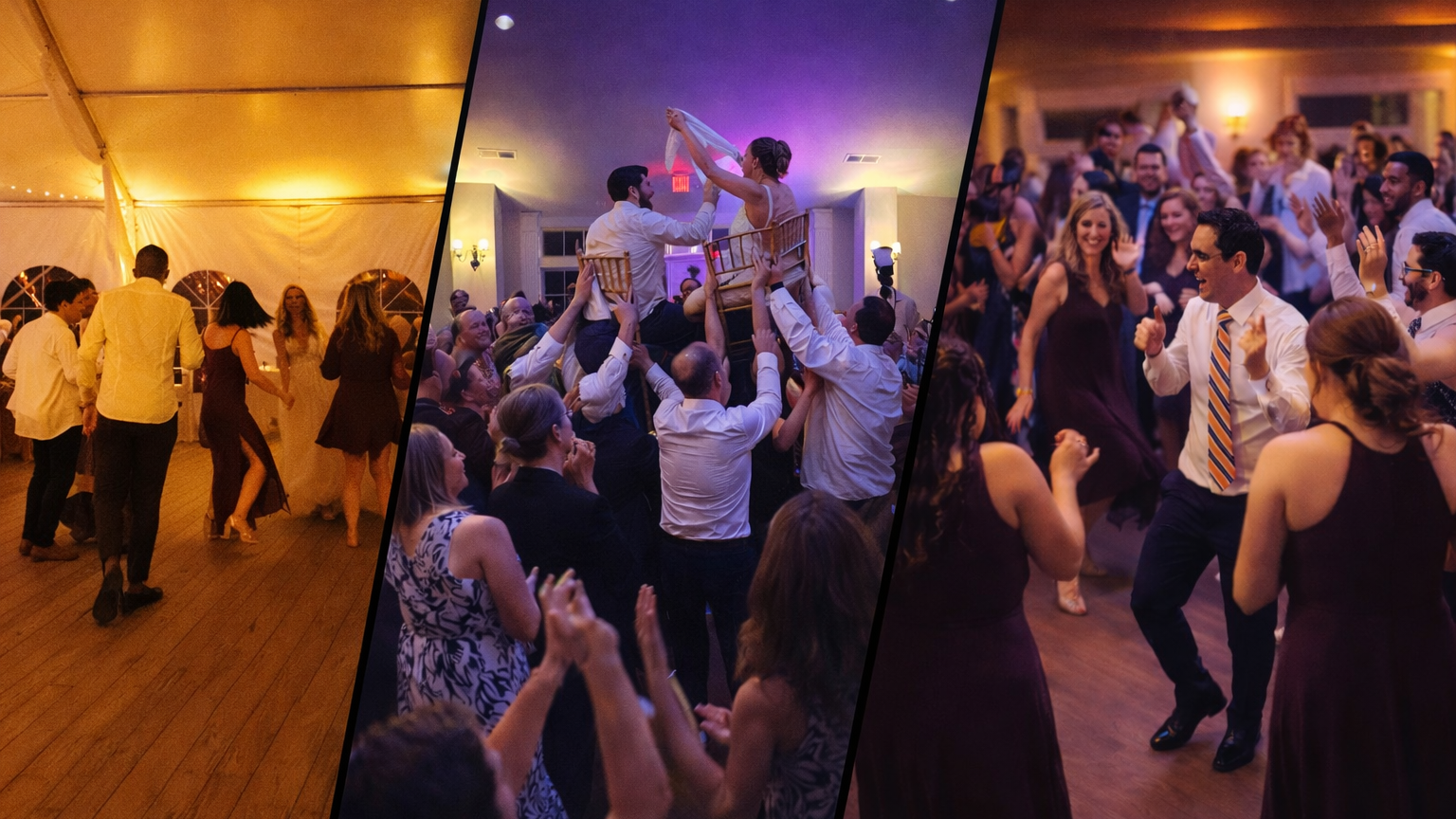
The difference between “some dancing” and a truly packed dance floor usually isn’t one magic song.
It’s strategy:
- how the energy is built over time
- how genres are bridged without whiplash
- how the DJ adapts to your guests, not a generic playlist
This article explains how great wedding DJs approach dance floors so you can plan your music with confidence and set expectations that lead to a better party.
Want to listen along while you read? Here are quick “starter” searches by energy phase (links are lighter than embeds):
- Warm-up set: Spotify · YouTube
- Momentum set: Spotify · YouTube
- Peak set (sing-alongs + bangers): Spotify · YouTube
- Reset songs (breathers): Spotify · YouTube
The big idea: a dance floor is built in waves
Most weddings don’t go from dinner to full send in one song.
A reliable structure is:
- Warm-up set (familiar, low-risk songs)
- Momentum set (bigger hooks, more movement)
- Peak set (hands up, singalongs, biggest bangers)
- Reset (one breather, then back up)
- Repeat
The “reset” is important. Guests need water, bathroom breaks, and social time. A great DJ uses resets intentionally so the floor doesn’t collapse.
Crowd types: what your guest list is telling you
The “party friends” crowd
Usually responds well to:
- quick mixing
- high-energy pop/hip-hop throwbacks
- big singalongs
The “family reunion” crowd
Usually responds well to:
- classics across decades
- line dances (used strategically, not back-to-back)
- clear transitions that don’t alienate older guests
The mixed crowd (most weddings)
The goal is bridging:
- find songs that multiple generations recognize
- alternate styles in a way that feels intentional
- avoid long stretches that serve only one group
Genre bridging: how DJs move between styles without killing energy
Bridging is an art, but common techniques include:
- tempo matching (keep BPM similar as genre changes)
- shared hooks (songs everyone recognizes, regardless of genre)
- decade clusters (a short run of a decade, then a shift)
- clean edits (avoid awkward explicit moments)
If your vibe includes specific genres (Latin, country, EDM, Afrobeats, etc.), ask your DJ how they weave those in without isolating parts of the room.
Your “must-play” list: how to do it without hijacking the night
We recommend:
- 10–20 must-plays (max)
- 10–20 do-not-plays
- “nice-to-have” list separate from must-plays
The best must-plays are:
- meaningful to you
- recognizable enough that guests respond
- placed intentionally (not all in the first 30 minutes)
Requests: the truth about guest requests
Requests can be great. They can also derail the floor.
A professional approach:
- requests are considered, not automatically played
- your do-not-play boundaries are respected
- “vibe killers” are avoided during peak energy
If requests matter to you, ask your DJ their request policy and how they handle pressure from family.
The most overlooked dance-floor factor: transitions and dead air
Dead air kills energy faster than a “meh” song.
A good DJ:
- cues songs cleanly
- avoids long gaps
- uses short mic moments only when necessary
- keeps the room feeling continuous
Simple planning steps for a better dance floor
- Tell your DJ your top 3 priorities (high-energy? singalongs? elegant?)
- Share your crowd details (age range, cultural moments, genres)
- Decide how you feel about explicit music
- Agree on must-plays and do-not-plays
- Trust the professional to build the wave
If you want a more “you” dance floor, we can help you map a music plan that fits your guests and venue.
Next step: Check availability.
FAQs
How many must-play songs should we give our DJ?
Usually 10–20. More than that can restrict the DJ’s ability to adapt to the room.
Should we do line dances?
Only if you like them. A good DJ uses them strategically (one at a time, not a block that clears the floor).
Can we mix cultures and genres on the dance floor?
Yes. The key is bridging and pacing. Ask your DJ how they handle multi-cultural sets and transitions.