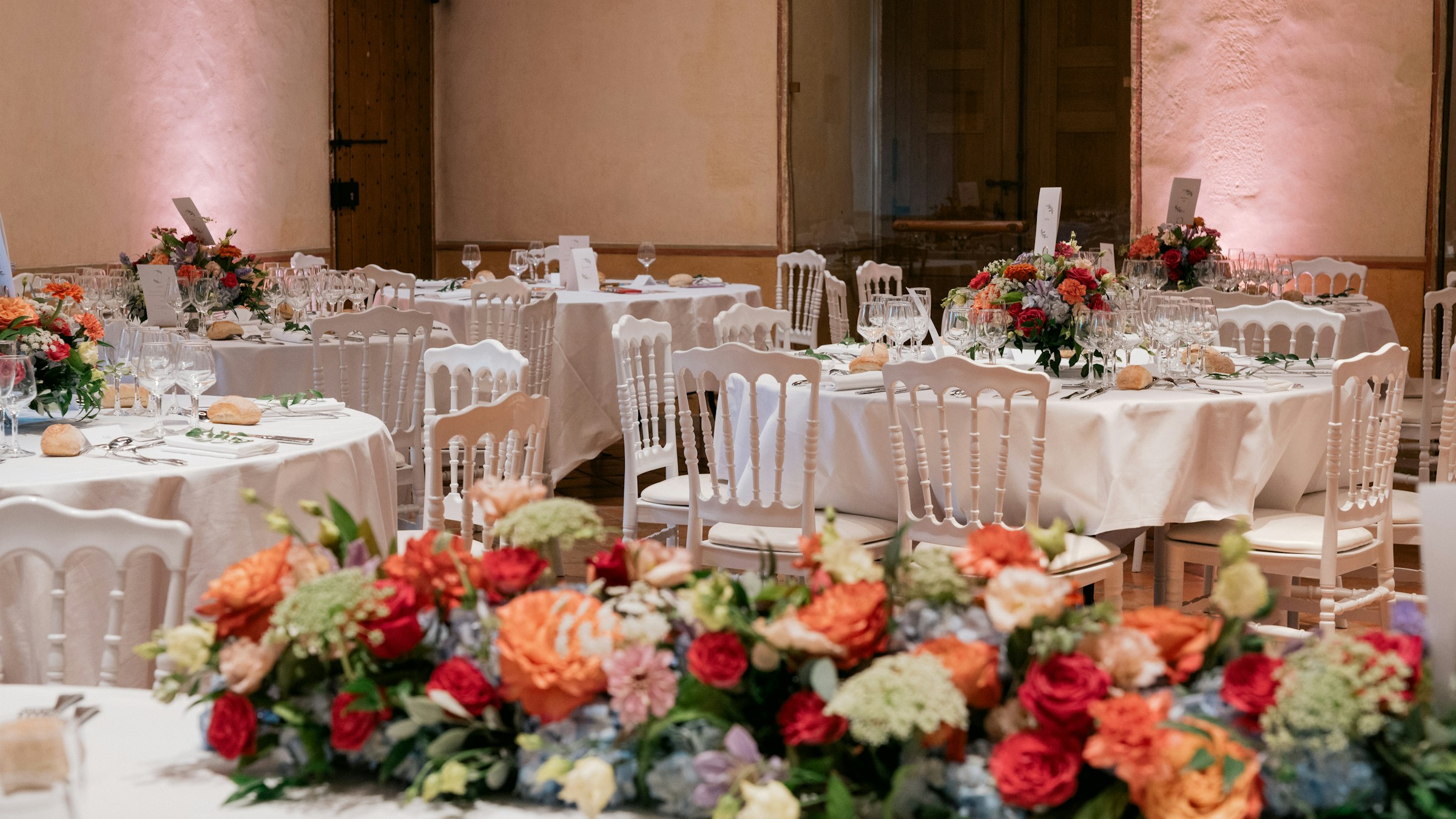
The venue is the first domino. Once you choose it, your date is set, your guest count is capped, your vendor options may narrow, and a significant portion of your budget is committed.
That’s why it’s worth being thoughtful here. Not just about aesthetics (“does it look pretty?”), but about logistics, restrictions, and what it actually takes to produce an event in that space.
I’ve performed at dozens of venues across Maryland, Virginia, and Pennsylvania. Here’s what I’d want couples to think about before they sign.
Start with capacity (and be honest about it)
Every venue has a maximum capacity number. But “maximum” and “comfortable” are not the same thing.
A venue that holds 200 people might feel cramped at 180 once you add a DJ setup, a dance floor, a photo booth, and buffet stations. Conversely, a space designed for 300 will feel empty with 100 guests, no matter how beautiful the room is.
What to do:
- Get the venue’s seated capacity and cocktail capacity (they’re different).
- Ask how the room is typically laid out for weddings your size.
- If the venue does both ceremony and reception, ask how the room transitions between them, and how long the flip takes.
All-inclusive vs. blank slate
Venues generally fall into two categories:
All-inclusive venues provide most of what you need: tables, chairs, linens, catering (sometimes in-house), a coordinator, and sometimes even basic lighting. You pay one price and a lot of decisions are handled for you.
Blank-slate venues (barns, warehouses, private estates, parks) give you a gorgeous space and let you bring in everything else. This means more freedom, but also more vendors, more logistics, and more coordination.
Neither is better. It depends on how much control you want and how much planning you’re willing to take on. If you’re going DIY on planning (no full-service planner), an all-inclusive venue removes a lot of complexity. If you have a specific creative vision and a coordinator to manage it, a blank slate gives you room to build exactly what you want.
Questions to ask:
- What’s included in the venue rental fee?
- Do you provide tables, chairs, and linens, or do we rent those separately?
- Is catering in-house, preferred list only, or open?
- Is there a venue coordinator, and what exactly do they manage? (More on this in Do You Need a Wedding Planner?)
Vendor restrictions
Some venues have a preferred vendor list, or even an exclusive list where you must choose from their approved vendors.
This isn’t necessarily a bad thing. Preferred lists often mean those vendors know the venue well, understand the load-in process, and have a working relationship with the venue staff. That can actually make your day smoother.
But it does limit your choices. Before you commit, ask:
- Can we bring in any vendor, or is there a required/preferred list?
- If there’s a preferred list, is it a suggestion or a requirement?
- Are there exceptions for specific vendor categories (e.g., you can bring your own DJ but catering must be in-house)?
Sound, power, and curfew
These are the logistics that couples rarely think about until it’s too late.
Sound restrictions and decibel limits:
Many venues have noise ordinances or decibel limits, especially outdoor venues and farm properties in residential areas. This is more common (and more impactful) than most couples realize.
Some venues set a hard decibel cap in the contract, often around 85 dB, measured at the DJ location. That number sounds reasonable on paper, but here’s what it actually means in practice: a room with 60 or more guests talking over dinner, plus background music at a comfortable level, can approach 85 dB on its own. Conversations, laughter, clinking glasses, and ambient music add up fast. You haven’t even started dancing yet, and you’re already near the limit.
When it’s time to open the dance floor and bring the energy up, you need headroom. The difference between 85 dB and 95 or 100 dB is enormous. Sound is measured on a logarithmic scale, so an extra 10 dB isn’t “a little louder.” It’s roughly twice as loud to the human ear. If your venue caps you at 85 dB and your DJ is being monitored at the booth (not at the property line, where noise ordinances typically apply), a packed dance floor may never feel like a real party.
This is particularly common at farm and estate venues in Loudoun County, Virginia, where residential proximity and county regulations create strict enforcement. Some venues are more flexible than others, and the details aren’t always obvious from a tour or even a first read of the contract.
What to ask:
- “Is there a decibel limit? What is it, and where is it measured?”
- “Is there a sound curfew? What time does music need to stop?”
- “Are there noise complaints on record?” (This tells you how strict enforcement really is.)
- “Is the limit enforced at the DJ booth, at the edge of the reception space, or at the property line?”
If a raging dance floor is part of your vision, this is one of the most important questions you can ask before signing. Not every venue will volunteer this information upfront, and your vendors may not flag it either. Ask us about specific venues, because we’ve worked at many of them and know which ones have room to turn it up and which ones don’t.
Power access:
- Outdoor and barn venues sometimes have limited electrical capacity. This affects lighting, sound systems, and catering equipment.
- Ask: “Where are the electrical outlets near the reception space?”
- If the ceremony is in a field, garden, or wooded area, ask about power access there too. This is where wireless and battery-powered audio becomes essential.
Curfew and timing:
- Some venues have hard end times (10 PM, 11 PM). This shapes your entire reception timeline.
- Ask: “What time does the event need to end? Is there flexibility?”
- Ask: “When can vendors load in and when is the teardown deadline?”
Indoor, outdoor, or both?
Many venues offer both indoor and outdoor spaces. This sounds ideal, but it adds complexity:
- Rain plan. If your ceremony is outdoors, what happens in bad weather? Is there a covered backup space, or does everything move indoors?
- Audio coverage. Outdoor spaces need different audio setups than indoor rooms. For more on this, see Indoor vs. Outdoor Weddings: Audio Tips.
- Guest flow. How do guests move between spaces? Long walks between ceremony and reception sites can create awkward gaps.
The “vibe test”
Beyond logistics, the venue needs to feel right.
- Visit at the same time of day your wedding will happen. A space that’s gorgeous at noon might feel different at 7 PM.
- Ask to see it during or after an event setup (some venues allow this).
- Take photos and video. You’ll forget details after touring 4 or 5 places.
- Bring your partner. This decision should be mutual.
Questions to bring to every venue tour
Keep this list on your phone:
- What’s the rental fee, and what does it include?
- What’s the maximum guest count (seated and cocktail)?
- Is catering in-house, preferred, or open?
- Is there a venue coordinator? What do they manage?
- Can we bring our own vendors?
- What are the sound/noise restrictions? Is there a decibel limit, and where is it measured?
- What time does the event need to end?
- When can vendors load in?
- What’s the rain plan for outdoor ceremonies?
- Where are the electrical outlets and power sources?
- Is there on-site parking? How much?
- Are there any dates already booked for our target month?
Key takeaways
- Choose your venue first. It drives your date, budget, guest count, and vendor options.
- Know the difference between all-inclusive and blank slate, and choose based on how much planning you want to manage.
- Ask about vendor restrictions, sound/decibel limits, and curfews before you sign. A low dB cap can make or break your dance floor.
- Power and audio logistics matter more than most couples realize, especially at outdoor and barn venues.
- Visit the venue at the time of day your event will happen.
What’s next?
Once your venue is booked, it’s time to build the rest of your vendor team.
Next in this series: How to Hire Wedding Vendors: Where to Look and What to Ask
Part of: How to Plan a Wedding: The Complete Guide (2026)
For a venue-specific guide with production notes, check out Top 10 Wedding Venues in Maryland (2026).
Ready to discuss entertainment for your venue? Check availability.