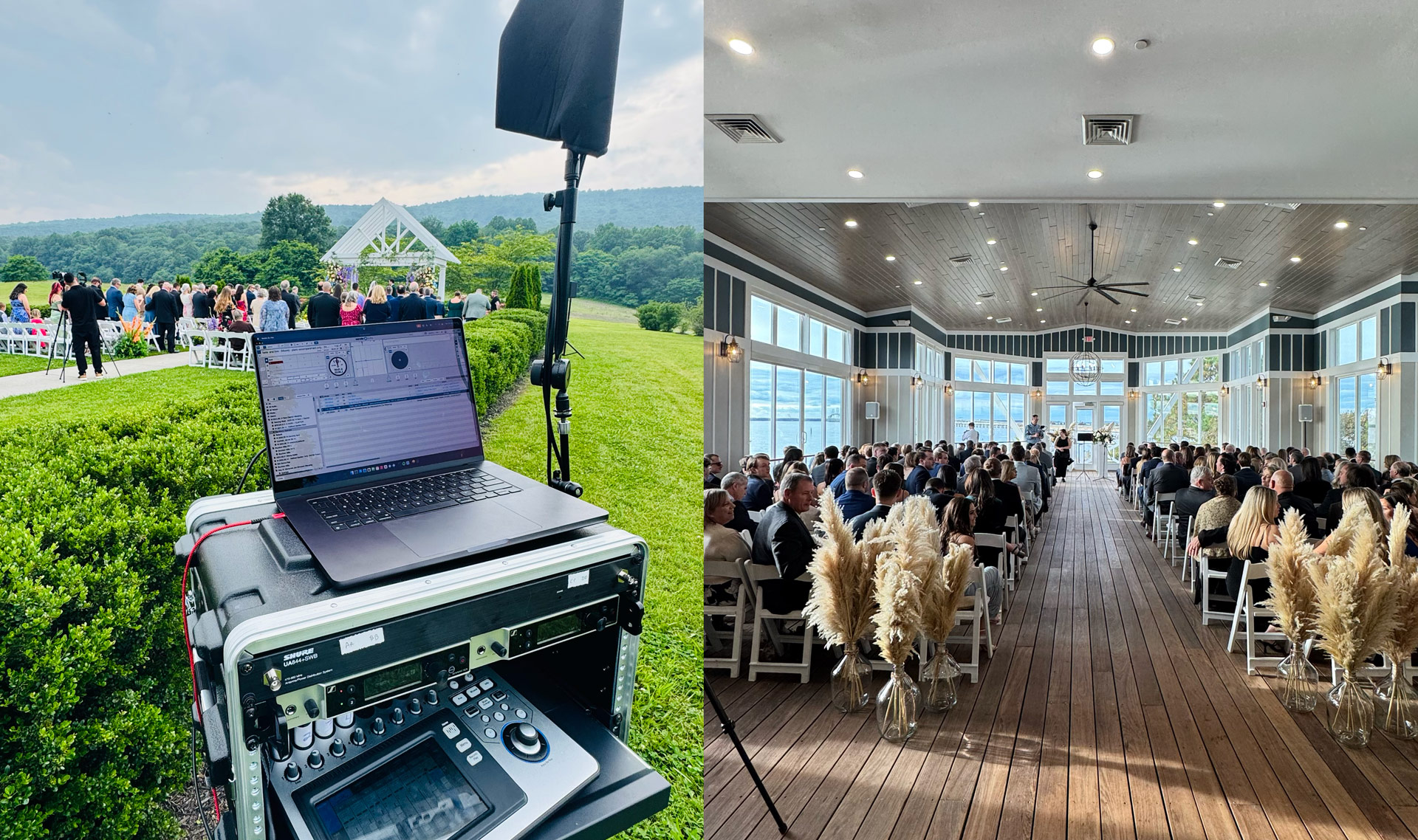
Outdoor weddings are skyrocketing again in 2026, especially tent weddings, estate lawns, vineyards, and ceremony sites tucked into fields or tree lines.
The tradeoff: outdoors can be stunning, but it adds variables that can quietly wreck the guest experience if you don’t plan for them:
- wind and ambient noise
- power access
- audio coverage for vows
- lighting and mood control as the sun goes down
This guide compares indoor vs outdoor weddings with a special focus on sound and lighting, because those are the two areas couples most often underestimate.
Outdoor weddings (2026’s big trend)
Pros
- unbeatable scenery and photos
- flexible layouts
- tent receptions can feel like your own private venue
Cons
- weather variables (rain, wind, heat)
- power limitations
- audio clarity challenges
- lighting needs once it gets dark
If you’re planning outdoors, read this too: Rain Plans, Power Problems, and Backup Gear.
The audio challenge outdoors (and how to solve it)
Outdoor audio isn’t about “bigger speakers.” It’s about coverage and intelligibility.
1) Wind noise
Wind can hit microphones and cause rumble, distortion, or dropouts.
Best practice:
- use professional lav mics with wind protection
- place speakers correctly so you don’t need to over-amplify
2) Power access
If the ceremony location is far from outlets, extension cords become:
- a safety issue
- a photo issue
- a reliability issue
This is why wireless/battery solutions matter. More here: Why Wireless Audio Matters for Barn and Outdoor Weddings.
3) Speaker placement
One speaker in a wide outdoor space often fails: the front rows get blasted while the back rows still can’t hear.
A pro setup focuses on:
- even coverage
- comfortable volume
- clear speech
Deep dive: Ceremony Audio 101.
Indoor weddings (the control advantage)
Pros
- climate control
- stable power
- easier lighting control
- more predictable sound
Cons
- some venues can feel dark or “flat” without intentional lighting
- reflective rooms can make speeches harder to understand
Indoor weddings shine when you design atmosphere:
- warm uplighting
- controlled “moment lighting” for dances
- intentional transitions between dinner and dancing
Lighting guide: Uplighting for Weddings.
The best compromise: indoor/outdoor flow
A popular 2026 format:
- ceremony outdoors
- cocktail hour outdoors
- reception indoors
This can be incredible if audio is planned as a system across spaces.
What to confirm:
- do you need separate speaker systems?
- who controls microphone handoffs?
- will announcements be heard in both spaces?
- will the DJ/MC coordinate guest movement without chaos?
Coordination guide: Vendor Coordination 101.
Quick planning checklist (sound + lighting)
Ask your vendor:
- What microphones will be used for officiant and vows?
- How do you handle wind?
- Do you need power at the ceremony site? If not, what’s your battery runtime?
- How will speakers be placed to cover the full seating area?
- What’s the rain plan and who makes the call?
- How do you handle lighting transitions after sunset?
The bottom line
Outdoor weddings are magical, but the magic disappears if guests can’t hear vows or the reception feels dim and undefined.
If you want help planning a smooth indoor/outdoor experience (audio, lighting, flow), we’re happy to talk.
Next step: Check availability.
FAQs
Do we need microphones for an outdoor ceremony?
If you want guests to hear vows clearly, especially with 80+ guests, yes.
Are tent weddings harder for DJs?
They can be, mainly due to power and lighting needs. With the right planning and equipment, they can be incredible.