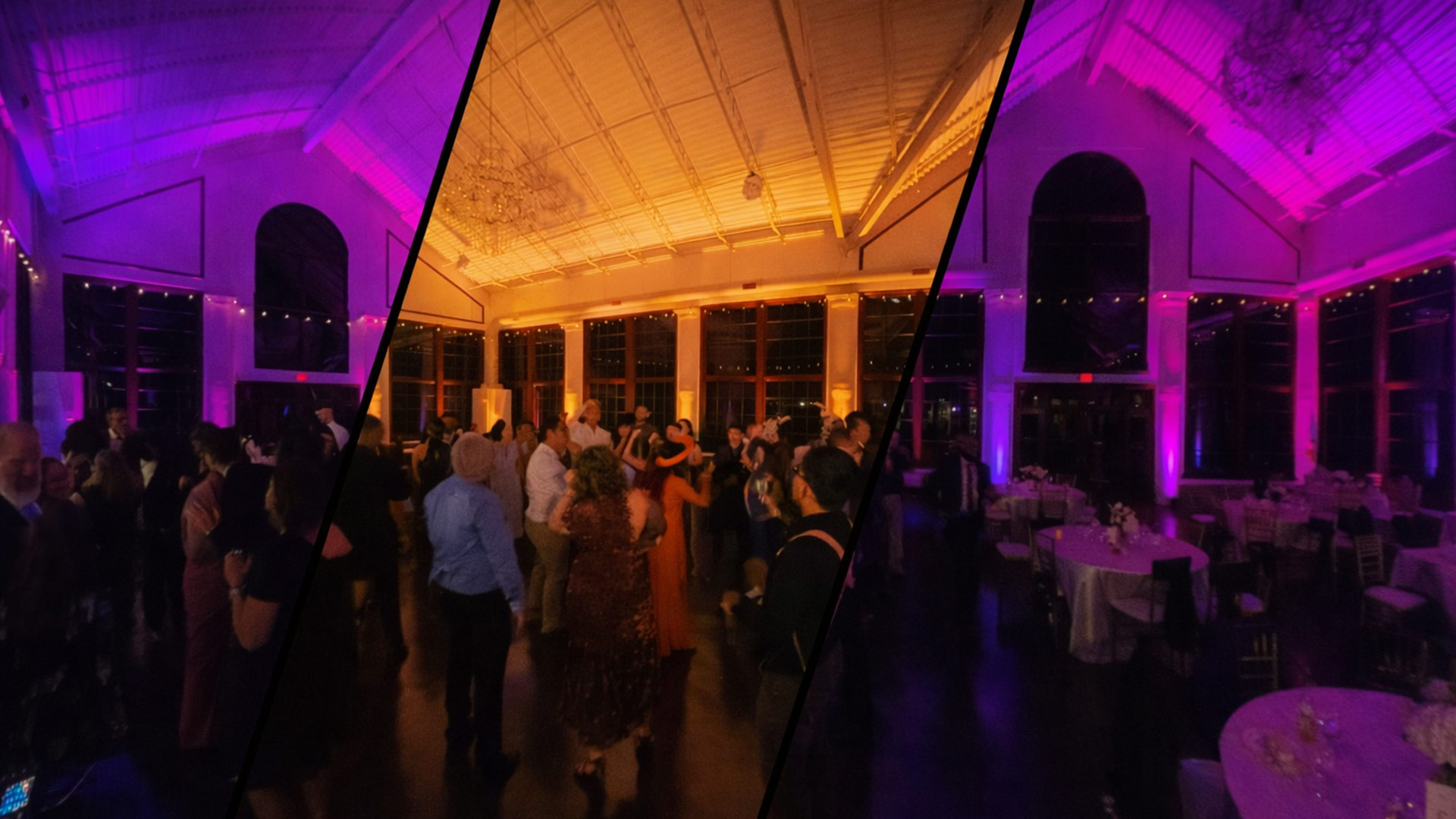
Uplighting is one of the easiest ways to make a venue feel intentional, especially if the space is a little dark, a little plain, or very large.
But it’s also easy to waste money on lighting that’s placed poorly, colored poorly, or (worst) runs in sound-active “party mode” all night.
This guide explains what uplighting actually does, where it matters most, and how to budget it.
What uplighting actually changes
Uplighting is light placed on the floor aimed upward to wash walls and architecture.
It changes the room by:
- adding depth (walls stop feeling flat)
- warming up large spaces (especially barns and ballrooms)
- tying decor together (your color palette feels cohesive)
- improving photos (backgrounds look richer and less “black hole”)
If you’ve ever seen a venue that looks “meh” in person but stunning in wedding photos, lighting is often the reason.
Where uplighting matters most (high impact zones)
1) The walls guests see behind the dance floor
This is the visual anchor of the night. If uplighting is limited, prioritize:
- the wall behind the DJ/booth
- visible columns or architectural features
2) The wall behind the sweetheart table or head table
This helps your most photographed area look premium.
3) Large blank walls in barns and industrial spaces
Barns often have beautiful beams but dark corners. Uplighting can turn “dark void” into warm atmosphere.
4) Entry and bar areas
These are where guests spend a lot of time, especially non-dancers.
How many uplights do you need?
It depends on the perimeter and how evenly you want coverage.
Rules of thumb:
- 8–12 uplights: small rooms or partial coverage
- 12–18 uplights: medium rooms, decent coverage
- 18–24 uplights: larger spaces or full perimeter look
Ask your lighting provider how they space uplights. Professionals will talk about perimeter, spacing, and key focal points.
Color selection (what looks elegant vs what looks “cheap”)
Most couples don’t want a rainbow. They want a mood.
Elegant uplighting tends to be:
- warm amber
- soft blush
- deep navy
- rich purple
- clean white (careful, it can feel sterile if too bright)
Avoid:
- neon greens/reds
- rapid color changes during dinner
- any setup that “listens to the bass” and blinks randomly
Great lighting is intentional. It supports the room and changes with the night.
Programming: the difference between “set and forget” and “designed”
Ask whether uplighting can be programmed for scenes, such as:
- cocktail hour: warm + subtle
- dinner: calm, romantic, not distracting
- dancing: slightly brighter or color-shifted to match energy
Even if you keep one color all night, controlling brightness matters a lot.
Budget guidance (what couples typically see)
Pricing varies by venue size and provider quality, but a common range:
- Basic uplighting: $600–$1,200
- Premium uplighting (more fixtures, better programming): $1,200–$2,000
- Full production (uplighting + intelligent lighting + add-ons): $2,000–$3,500+
If you’re trying to decide “is it worth it,” ask for:
- examples from your venue or a similar space
- how many fixtures are included
- whether they’re wireless (cleaner setup)
The best question to ask your lighting vendor
“Is your lighting DMX-controlled and programmed, or sound-active?”
If it’s sound-active, it may feel like a club (and not in a good way).
The bottom line
Uplighting is often the highest-impact decor upgrade because it improves the entire room, not one table.
If you want your venue to feel elevated and your photos to look richer, it’s usually a smart investment, especially for barns, estates, and large reception spaces.
Want to see what uplighting could look like in your venue? Contact us and we’ll talk through options.
FAQs
Is uplighting worth it for a bright venue?
Sometimes yes, especially if the venue becomes darker at night or has large blank walls. The best way to know is to see examples from the same venue at night.
Do uplights need power outlets?
Some do, but wireless battery uplights are common now and keep cables out of photos.
Can uplighting match our colors?
Yes. Provide your palette and your vendor should recommend shades that look good in photos (not just on a color wheel).