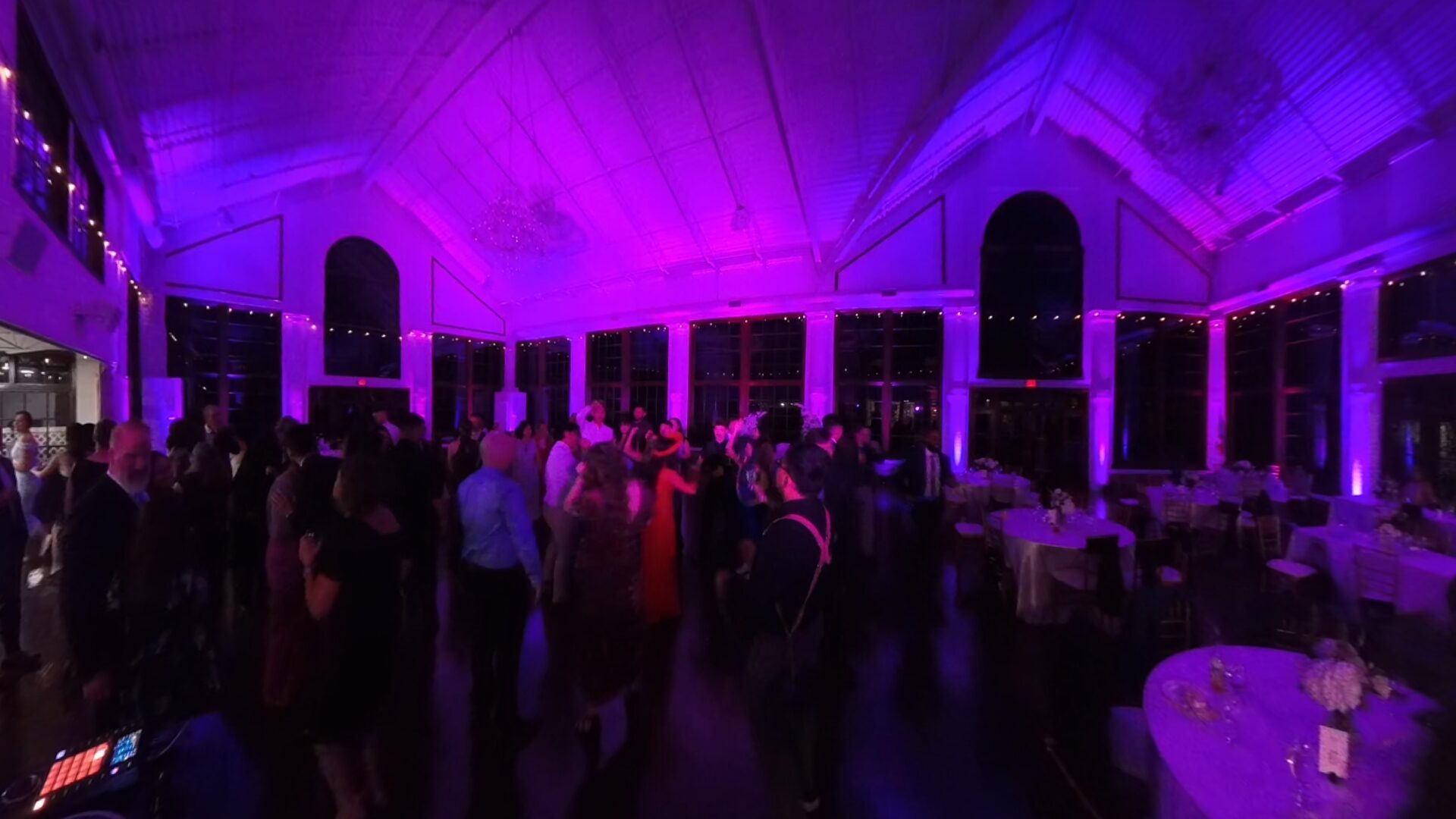
When couples start planning their wedding, the decor checklist usually looks like this:
- ✅ Flowers
- ✅ Linens and table settings
- ✅ Centerpieces
- ✅ Signage and place cards
- ❓ Lighting… maybe?
Lighting often falls into the “nice-to-have” category. It’s a potential add-on if there’s room in the budget. But here’s the truth: lighting is the single most impactful decor element you can add, and it’s often more affordable than upgrading your floral arrangements.
If you want to see how this translates into real-world packages (uplighting, intelligent moving heads, and how scenes change through the night), start here: Lighting & Uplighting.
Why Lighting Gets Overlooked
There are a few reasons lighting doesn’t get the attention it deserves:
1. It’s Invisible During Venue Tours
When you tour a venue, you see it in daytime or with all the lights on. Flowers and linens are tangible and easy to visualize. Lighting? You can’t imagine what it will look like until you actually see it in action.
2. It’s Not Instagrammable (Yet)
Couples scroll Pinterest and Instagram for inspiration, and they see beautiful tablescapes, floral installations, and styled shoots. Lighting doesn’t photograph the same way in isolation. It only shines (pun intended) when it’s integrated into the full space.
3. It Feels Like “DJ Territory”
Many couples assume lighting is something the DJ handles as an afterthought. And if your DJ is still using sound-active party lights that blink randomly, that assumption might actually hurt your aesthetic.
What Lighting Actually Does for Your Venue
Let’s get specific about the transformation lighting creates:
1. Uplighting Adds Depth and Drama
Most venues rely on overhead lighting, like ceiling lights, chandeliers, or exposed bulbs. This creates flat, one-dimensional lighting that washes out your decor.
Uplighting changes this by:
- Casting light upward along walls and architectural features
- Creating depth and dimension in the space
- Adding color that ties into your wedding palette
- Highlighting features you want to emphasize (exposed beams, brick walls, columns)
Example: A barn with standard overhead lighting looks rustic but plain. Add amber uplighting along the walls, and suddenly the wood tones glow, the beams pop, and the entire space feels warm and intentional.
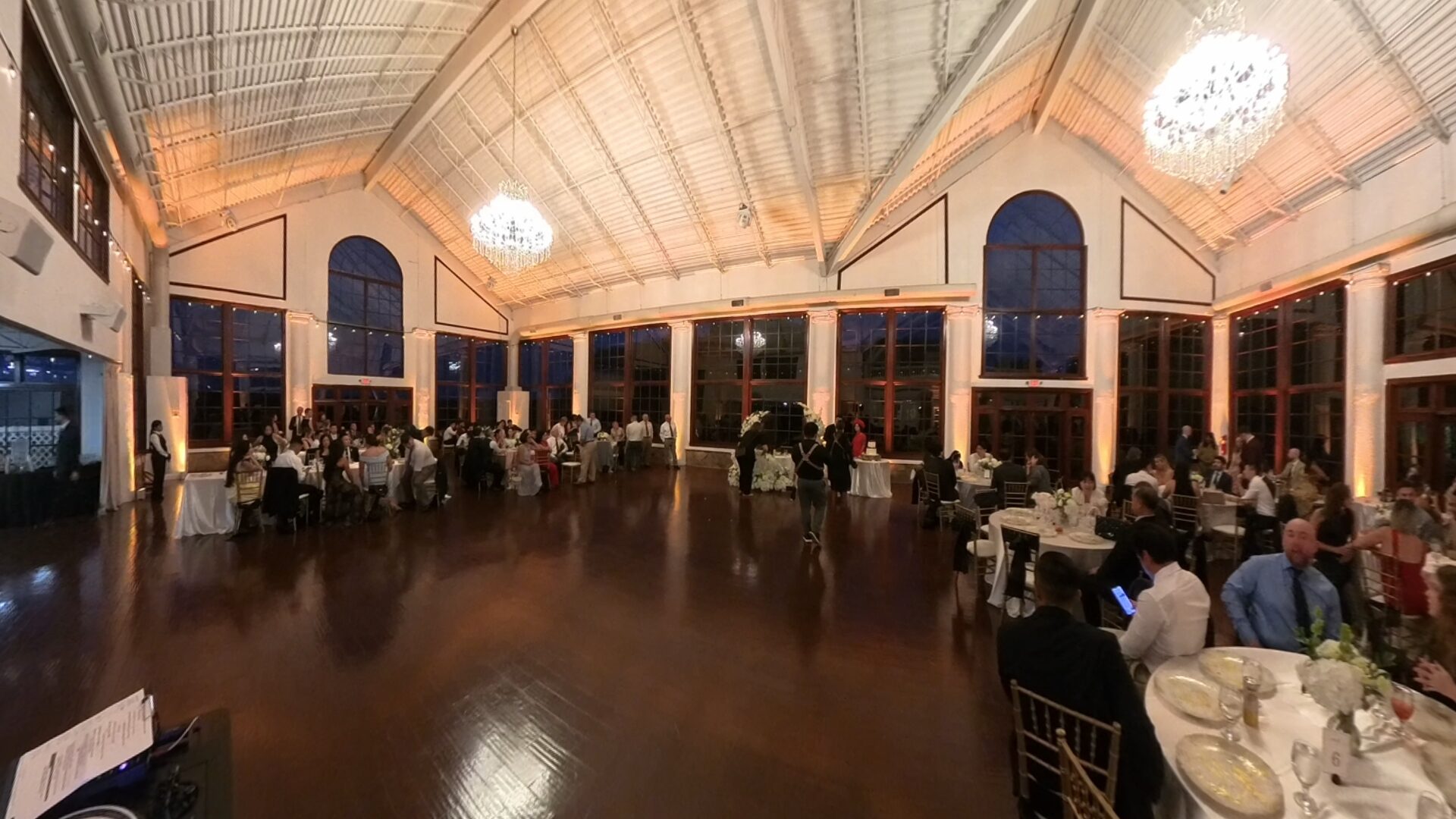
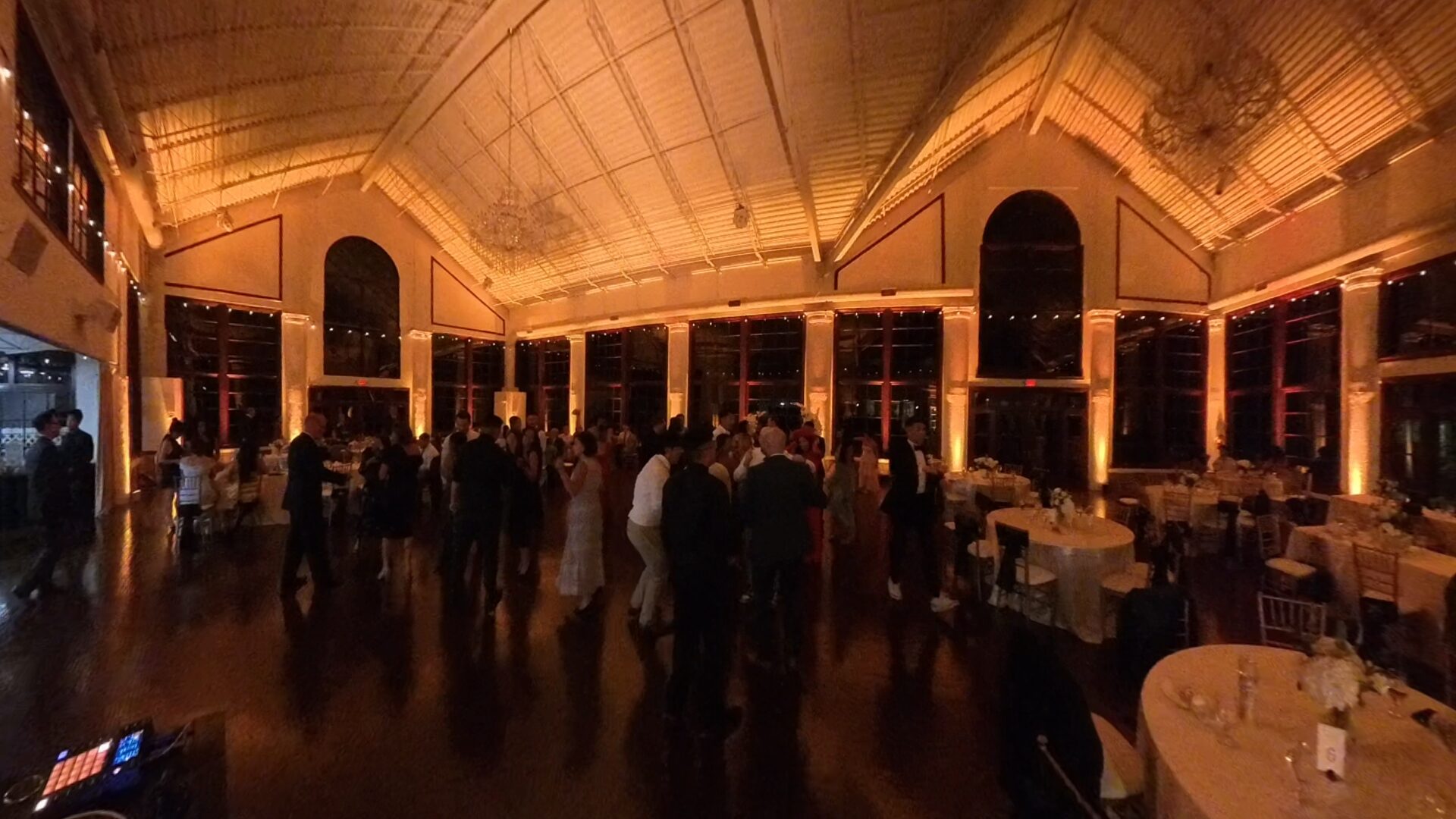
2. Intelligent Lighting Creates Moments
Unlike static uplighting, intelligent moving lights change throughout your event. This allows you to create distinct atmospheres for different parts of the night:
- Dinner: Soft, romantic washes that don’t distract from conversation
- First Dance: Spotlighting that draws attention to the couple
- Dancing: Dynamic patterns that match the energy of the music
Important note: sometimes the most “cinematic” choice is no accent lighting at all for a key moment, especially when there’s still daylight outside. This is a real example where the couple preferred clean, natural light during their first dance.
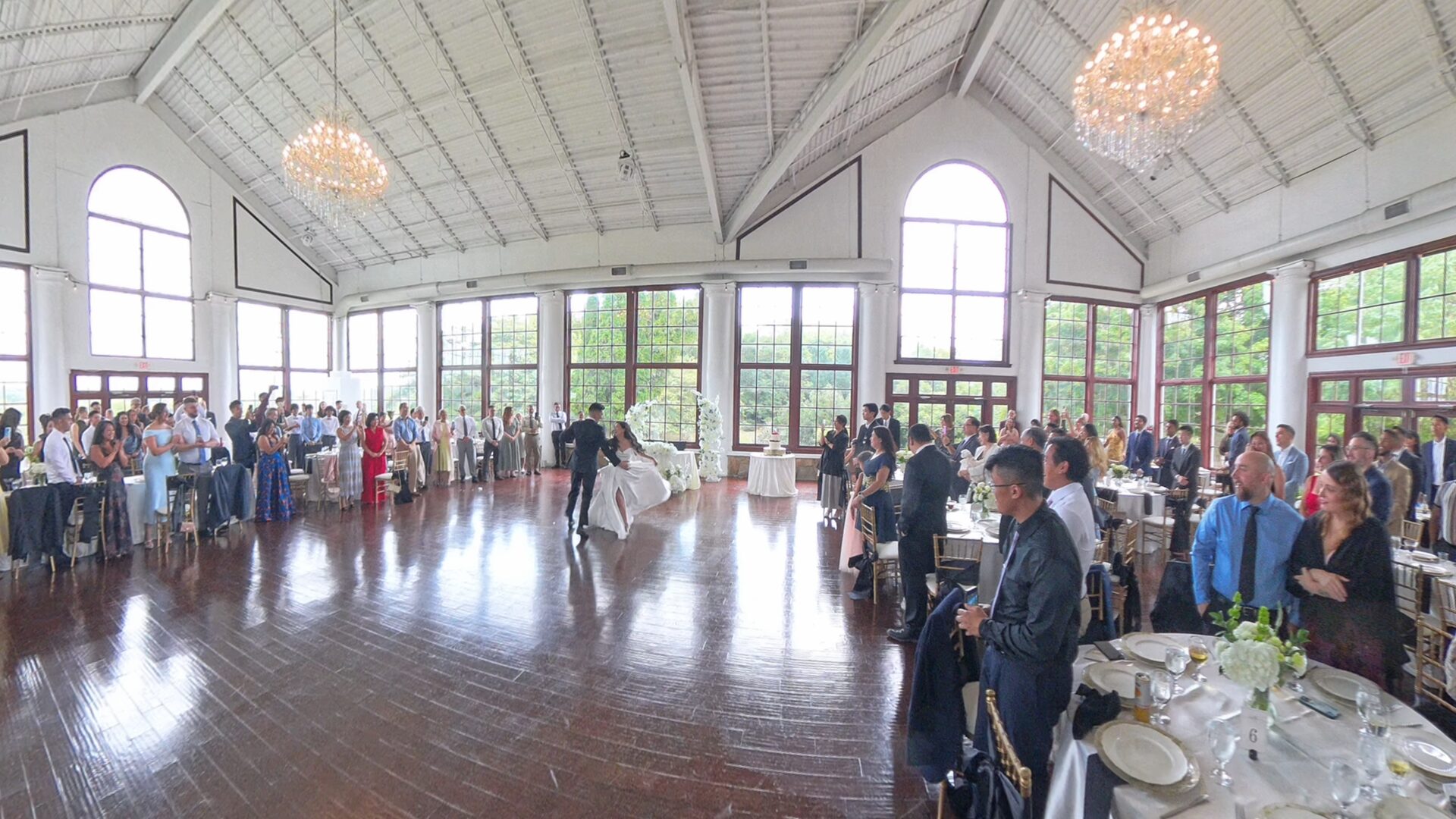
3. Lighting Elevates “Budget” Decor
Here’s a secret: Expensive florals in a poorly lit room look less impressive than simple centerpieces in a beautifully lit space.
Why? Because lighting affects everything it touches:
- Makes colors richer and more saturated
- Creates shadows and highlights that add visual interest
- Helps centerpieces and florals “pop” in photos
Real-world example: One couple had a $5,000 floral budget but chose to move $1,500 into lighting instead. The result? Their $3,500 in florals looked more expensive than venues with twice the floral budget but no intentional lighting.
The Difference Between “DJ Lights” and “Intelligent Lighting”
Not all wedding lighting is created equal. Here’s what separates cheap party lights from professional venue lighting:
Sound-Active Party Lights (What to Avoid)
- Blink randomly to bass hits
- No control over color or timing
- Often harsh, saturated colors (bright red, neon green)
- Look like a nightclub, not a wedding
DMX-Controlled Intelligent Lighting (What You Want)
- Programmed to match the mood and moment
- Smooth color transitions
- Controlled intensity (subtle during dinner, vibrant during dancing)
- Looks elegant in photos
Ask your vendor: “Is your lighting sound-active or DMX-controlled?”
If they say “sound-active,” that’s a red flag.
What to Budget for Wedding Lighting
Lighting costs vary by venue size and complexity, but here’s a general guide:
| Package | What’s Included | Typical Cost |
|---|---|---|
| Basic Uplighting | 6–12 uplights, single color or slow fade | $600–$1,200 |
| Premium Uplighting | 12–24 uplights, custom colors, timeline programming | $1,200–$2,000 |
| Full Production | Uplighting + moving heads + monogram | $2,000–$3,500 |
Is It Worth It?
Compare this to other decor line items:
- Floral upgrades: $1,500–$8,000 for premium arrangements
- Linen upgrades: $800–$1,500 for specialty linens
- Chair covers/sashes: $600–$1,200
Lighting often delivers more visual impact per dollar than any of these, and it affects everything in your space, not just one table.
Want the practical “what’s included” view (wireless uplights, DMX scenes, and add-ons)? See Lighting Packages.
Questions to Ask Your Lighting Provider
If you’re considering adding lighting to your wedding, ask these questions:
1. “Can I see examples from my specific venue?”
Lighting looks different in every space. Ask for photos from your actual venue (or venues with similar layouts) so you can see realistic results.
2. “Is your lighting wireless?”
Wireless uplights mean no cables running across your dance floor or taped to walls. It’s cleaner, safer, and better for photos.
3. “How do you handle color selection?”
Professional vendors will ask about your wedding colors and show you options. Amateurs will show up with whatever they have in the truck.
4. “What’s included in your timeline programming?”
Good answer: “We create different lighting scenes for ceremony, cocktail hour, dinner, first dance, and open dancing.”
Bad answer: “We just set it and let it run all night.”
5. “Do you bring backup equipment?”
Pro vendors always have redundant systems. Lights fail sometimes. Backups matter.
The Bottom Line
If you’re allocating your decor budget and wondering whether lighting is “worth it,” here’s my answer: Yes, but only if it’s done right.
Bad lighting (cheap party lights, mismatched colors, random blinking) is worse than no lighting at all. But professional, intentional lighting transforms your venue in ways that no other decor element can match.
Think of it this way: Your flowers and centerpieces exist within your space. Lighting creates the space. It’s the difference between decorating a room and designing an experience.
Want to see what lighting could do for your venue?
- Start with the service overview: Lighting & Uplighting
- Or jump straight to booking: Check availability