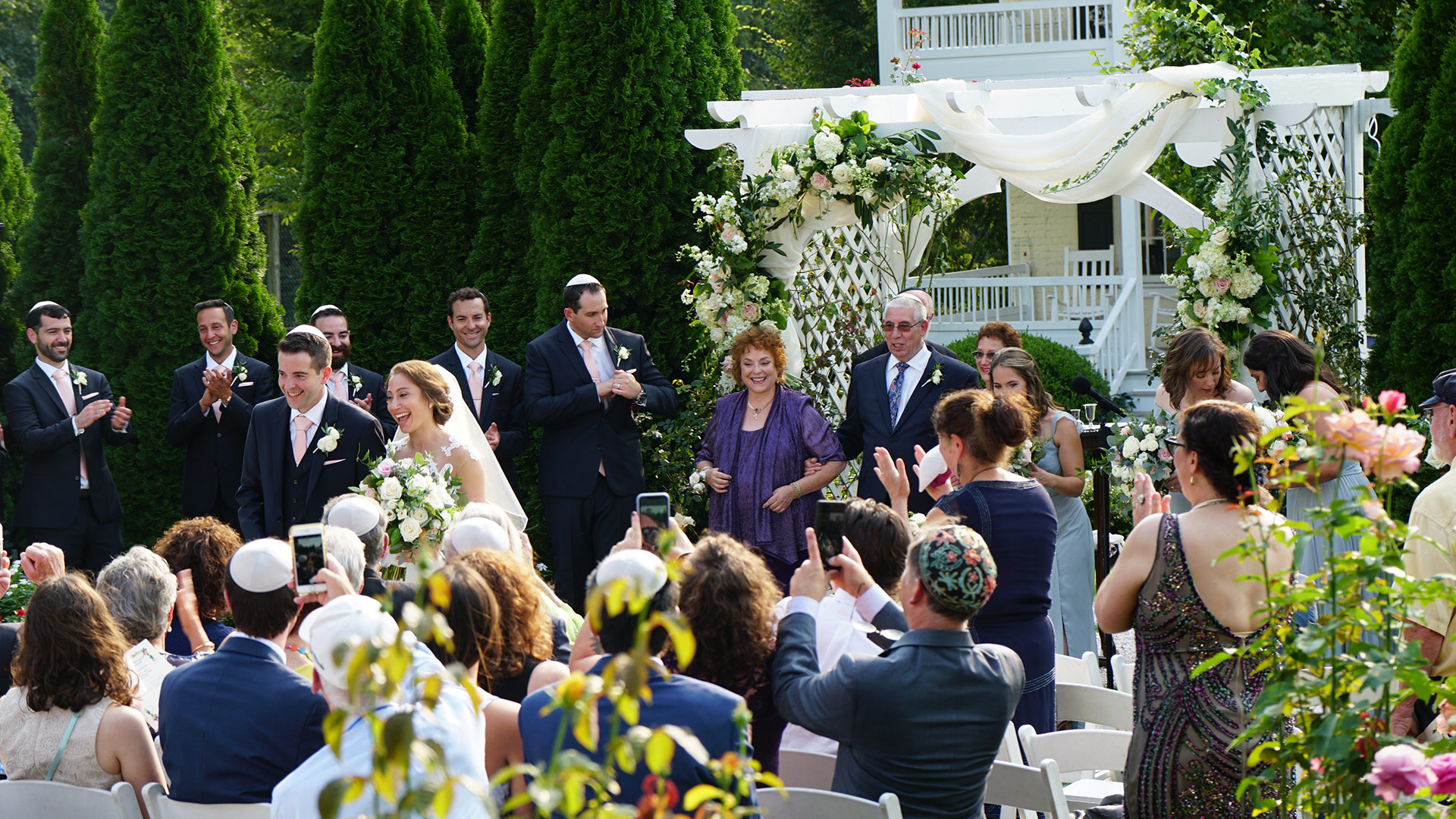
If guests can’t hear your vows, the most important moment of the day becomes a visual, when it should be a shared experience.
Ceremony audio is one of those details couples often assume will “just work.” Sometimes it does. But outdoor spaces, barns, estates, and even many indoor venues come with challenges that can make audio fail fast.
This guide explains ceremony sound in plain English so you can ask the right questions and avoid the common problems.
What makes ceremony audio hard (even for good vendors)
Outdoor noise and wind
Wind doesn’t just affect guests. It hits the microphone and creates rumble, distortion, or dropouts. Add nearby traffic, HVAC units, or guests chatting, and clarity drops quickly.
Large, open spaces
Sound doesn’t “fill” a field the way it fills a ballroom. It dissipates, so you need speaker placement that covers the seating area evenly.
Power limitations
Many ceremony locations are not near outlets. Running extension cords across grass can be unsafe and look bad in photos. Battery-powered, wireless options matter here.
Planning a barn or outdoor wedding? Read our detailed guide on why wireless audio matters for barn and outdoor venues to understand how battery-powered systems solve these challenges.
Feedback (the squeal)
Feedback happens when the microphone “hears” the speaker and loops. Proper mic choice, placement, and volume management prevent it.
The core goal: speech intelligibility
For ceremony audio, “loud enough” is not the same as “clear enough.”
The goal is speech intelligibility: guests can understand every word without strain.
That comes down to:
- microphone type and placement
- speaker placement (not just speaker power)
- controlling feedback and wind
Microphones: what couples should know
Officiant microphone
This is non-negotiable if you care about clarity.
Best options:
- Lavalier (lapel mic): small, discreet, great for speech
- Headset mic: highest clarity, less common for weddings
Avoid:
- relying on a single handheld mic passed around during ceremony
Couple microphones (vows)
There are a few approaches:
- Two discreet lav mics (one on each of you)
- One officiant mic plus coaching the officiant to project (not ideal)
- Handheld mic (works, but looks less clean in photos/video)
If you’re doing personal vows, having you both mic’d is a big upgrade.
Readers (optional)
If you have readings, plan for how they’ll be mic’d:
- a handheld mic at the reading spot, or
- a second lav mic, or
- a dedicated podium mic
Speakers: placement matters more than “bigger”
The best ceremony sound is created by coverage, not volume.
Good approach:
- two speakers forward, aimed to cover the seating area evenly
- placement far enough forward to avoid feedback, but not so far that back rows strain
For large guest counts, a pro may add:
- a second pair (delay/side fill) to cover back rows at lower volume
This improves clarity and keeps volume comfortable up front.
Music: processional, recessional, and “cue” moments
Ceremony music is about timing.
Make sure your vendor can:
- start/stop precisely for entrances
- handle multiple processional songs
- fade cleanly for the officiant
- coordinate cues with your planner and photographer
If you have a live musician plus DJ audio, clarify who controls what and how cues are communicated.
The ceremony audio checklist (couple-friendly)
Ask your entertainment vendor:
- What microphones will be used for officiant and vows?
- Will guests in the back be able to hear clearly? How do you ensure coverage?
- How do you handle wind outdoors?
- Do you need power near the ceremony site? If not, what’s your battery runtime?
- What’s your backup plan if a mic fails?
- Can you provide a photo of your typical ceremony setup?
Common mistakes (and how to avoid them)
“We’ll just speak loudly”
Guests may hear you in the first few rows and miss everything else. Also, speaking “loudly” changes the emotional tone of vows.
Bluetooth speakers
Bluetooth is not built for high-reliability live events. Dropouts and lag are common.
One speaker in a big space
It forces the front rows to be too loud and still leaves the back rows unclear. Coverage beats volume.
The bottom line
Great ceremony audio is invisible: guests simply feel connected to the moment.
If you’re planning an outdoor, barn, or estate ceremony, ask your vendor about true wireless options, speaker coverage, and mic strategy. Those three things prevent almost every ceremony audio problem we see.
If you’d like, we can talk through your venue and guest count and recommend an audio plan that keeps vows clear and photos clean.
Next step: Check availability.
FAQs
Do we need microphones for our ceremony?
If you want guests to hear vows clearly, especially outdoors or for 80+ guests, yes.
What’s the best mic for outdoor vows?
Discreet lavalier mics (properly wind-protected) are usually best. A professional can recommend the right setup for your specific space.
Can the venue provide ceremony audio?
Sometimes. Ask what mics and speakers they provide and whether they support vow mics (not just officiant).