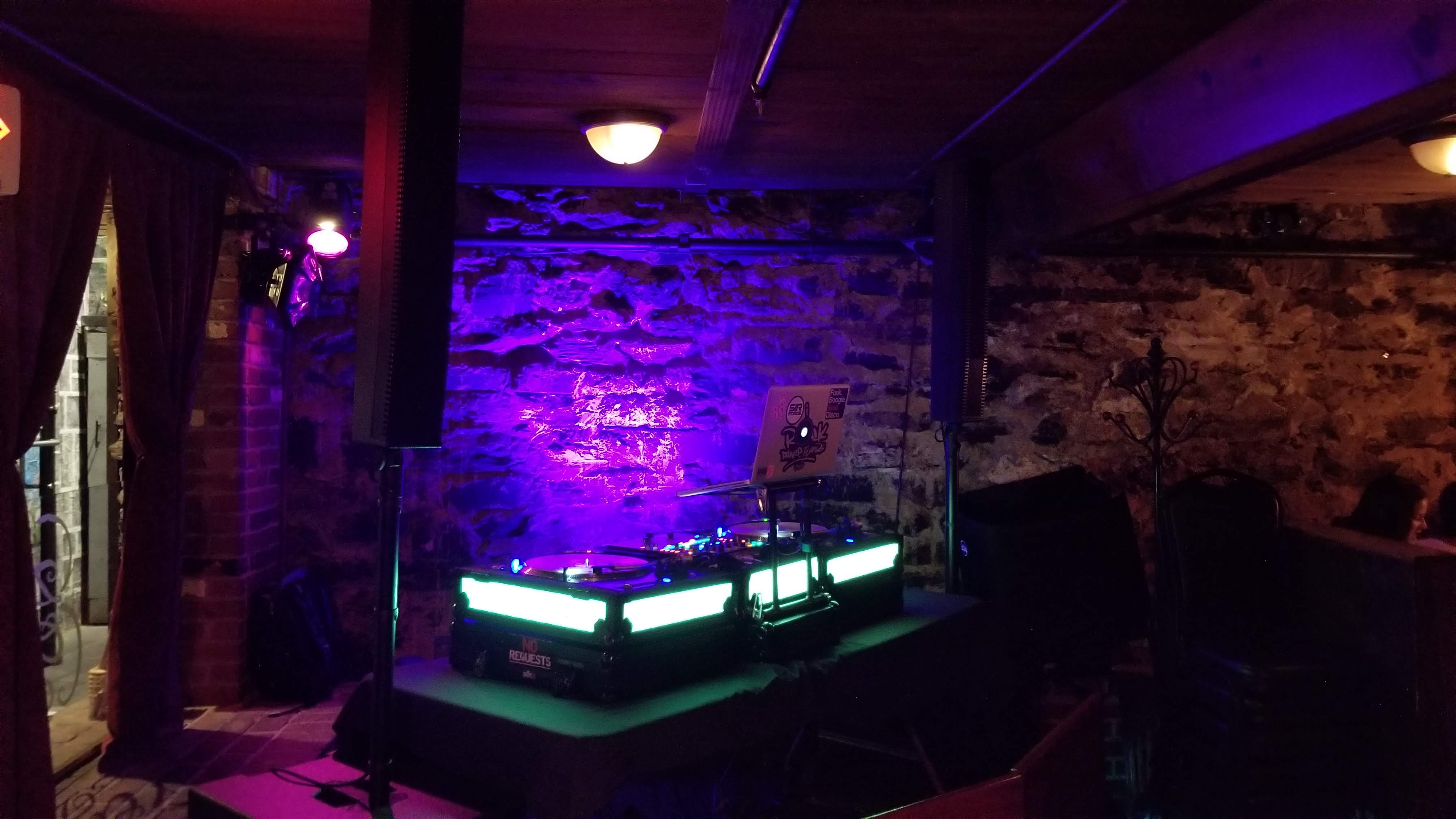
Between 2017 and 2020, I was a resident DJ at The Cellar Door in downtown Frederick, spinning Friday and Saturday nights. Three to four hours, every weekend, learning what actually works in a bar environment, not theory and not guesswork.
This isn’t a wedding. This isn’t a festival. Bar DJing is its own craft, and if you treat it like background music or a predictable setlist, you’ll lose the room, lose the staff’s respect, and lose the booking.
Here’s the framework I refined over years of packed (and sometimes not-so-packed) nights.
The real job: why bar DJing is different
Your job isn’t just to play music. It’s to create an environment where people buy drinks and stay longer.
Bars make money when:
- Guests are enjoying themselves (they order another round)
- The dance floor rotates (people cycle between dancing and the bar)
- Staff feel good about the vibe (they upsell, they recommend you to management)
Floor rotation = revenue strategy
A packed but stagnant dance floor is bad business. If everyone’s glued to the floor for 90 minutes straight, they’re not ordering drinks.
Energy waves aren’t just artistic; they’re a revenue tool. Build, peak, reset. People leave the floor, hit the bar, return refreshed. That’s the cycle.
Staff matter more than you think
The bartenders, servers, and door staff hear you every single shift. If you play the same setlist at the same times every week, they notice. They lose respect. And when management asks, “How’s the DJ working out?” staff opinions carry weight.
Stay fresh. Rotate your crates. Show them you’re putting in work.
Phase 1: the warm-up (9:00 PM – 10:30 PM)
Goal: Set the vibe. Allow conversation. Invite head-nodding, not dancing yet.
BPM Range: 85–105 BPM (or low-energy 110–120)
Vibe: Groovy, nostalgic, soulful, chill.
Why this phase matters
This is where amateurs phone it in. They throw on a Spotify playlist and wait for the crowd to show up.
Real DJs earn their money during the warm-up. You’re reading the early arrivals, testing musical directions, setting expectations. Lazy warm-ups lead to flat nights.
Go-to crates
- Nu-Disco / Indie Dance: Kaytranada, SG Lewis, Chromeo
- 90s/00s R&B Throwbacks: TLC, Usher, Aaliyah (mid-tempo, not bangers yet)
- Classic Rock / Yacht Rock: Fleetwood Mac (Dreams →), Steely Dan (Reelin’ In The Years →) (recognizable, low energy)
- Golden Era Hip-Hop: A Tribe Called Quest (Can I Kick It? →), De La Soul (Me Myself and I →)
Technique
Long blends. Let tracks breathe. Avoid aggressive scratching or quick cuts. Conversation should still be easy.
Phase 2: the build-up (10:30 PM – 11:30 PM)
Goal: Pull people toward the floor. Increase tempo. Test the waters.
BPM Range: 100–115 BPM
Vibe: Funky, bouncy, familiar.
Go-to crates
- Disco Edits / Funk: Earth, Wind & Fire, Chic, modern remixes
- Pop Hits (Current & Recurrent): Dua Lipa (Levitating →), The Weeknd (Blinding Lights →), Harry Styles (As It Was →)
- Twerk / Bounce: If the crowd is younger and dancing early
- Reggaeton / Latin Pop: Bad Bunny (Tití Me Preguntó →), J Balvin (Mi Gente →) (high energy at slower BPMs)
Avoiding predictability
If you play “Uptown Funk” at 10:45 PM every Friday, staff roll their eyes. Rotate your openers. Try different entry points. Keep people guessing (in a good way).
Technique
Start shortening songs. Verse-chorus-out. Quicker transitions to keep energy rising without exhausting people.
Phase 3: prime time (11:30 PM – 1:00 AM)
Goal: Peak energy. Sing-alongs. Full dance floor.
BPM Range: 120–128 BPM (House) / 70–80 BPM (Trap/Hip-Hop)
Vibe: High energy, anthemic, aggressive.
Go-to crates
- Tech House / Commercial House: Fisher, Dom Dolla, remixes of pop hits
Fisher – “Losing It”: This is the tech house anthem. If your crowd is into electronic vibes, this is your peak-hour weapon.
Also try: Dom Dolla (Take It →), another absolute banger in the tech house space.
- Club Bangers (2010s): Rihanna (We Found Love →), Calvin Harris, Pitbull (Give Me Everything →), Avicii (Levels →)
- Hip-Hop Anthems: Drake (God’s Plan →), Kendrick (HUMBLE. →), Megan Thee Stallion (Savage →)
- High-Energy Sing-alongs: The Killers (Mr. Brightside →), Bon Jovi (Livin’ on a Prayer →)
Floor rotation in action
Don’t let the floor stay at 100% for an hour straight. Drop a sing-along, let it breathe, then build again. People need permission to hit the bar. Give it to them with strategic resets.
Technique
Quick mixing. Wordplay transitions. Tone play. Acapella intros. Keep momentum moving but vary intensity so people don’t burn out.
Phase 4: the cooldown / late night (1:00 AM – close)
Goal: Keep them drinking. Capitalize on loose inhibitions. “Oh my god I love this song” moments.
BPM Range: Variable (anything goes)
Vibe: Grimy, unexpected, drunken sing-alongs.
Go-to crates
- Trap / Bass Music: If the crowd is heavy
- Guilty Pleasures: Backstreet Boys (I Want It That Way →), ABBA (Dancing Queen →), Spice Girls (Wannabe →)
- Punk Pop / Emo: Blink-182 (All The Small Things →), Fall Out Boy (Sugar, We’re Goin Down →)
Closing song strategy: read the room
You can’t stay here. You don’t have to go home, but you can’t stay here. Your closing song sets the memory they leave with.
The classics work. “Don’t Stop Believin’” (Journey) and “Closing Time” (Semisonic) are reliable, but read the room. The right closer depends on your crowd.
For millennial crowds:
- “Mr. Brightside” – The Killers: Universal sing-along, leaves them on a high note
- “Espresso” – Sabrina Carpenter: Playful, infectious energy, perfect upbeat closer
The goal: They leave on a high note, remembering the energy, not just the clock running out.
Technique
Hard cuts are acceptable here. Focus on song selection over technical perfection. People are drunk and happy, so lean into the chaos.
Emergency “save the floor” tracks
Keep these ready in a dedicated crate for when a set goes wrong.
The classics work. “I Wanna Dance with Somebody” (Whitney Houston), “Yeah!” (Usher), and “September” (Earth, Wind & Fire) are reliable, but they’re played out. Staff have heard them a thousand times. Here are equally effective (and sometimes better) alternatives:
Hip-Hop & R&B Floor Fillers
“1, 2 Step” – Ciara ft. Missy Elliott: Early 2000s energy with infectious handclaps. Less overplayed than “Yeah!” but just as effective.
“Poison” – Bell Biv DeVoe: New jack swing classic with a distinct beat. Works across age groups and feels fresh compared to standard throwbacks.
Dance & Club Classics
“Show Me Love” – Robin S.: Timeless 90s club anthem with a driving beat. Guaranteed floor filler that’s not as exhausted as Whitney.
“Groove Is In the Heart” – Deee-Lite: Fun, funky, irresistible bassline. Guaranteed crowd-pleaser with less baggage than overplayed standards.
“The Rhythm of the Night” – Corona: High-energy 90s dance hit. Still instantly recognizable but less played out than modern staples.
“Move Your Feet” – Junior Senior: Upbeat, catchy, full of energy. Feel-good vibe that cuts through flat moments.
Universal Rock Anthems
“Livin’ on a Prayer” – Bon Jovi: While popular, its sing-along quality brings the entire room together in a way few songs do. It feels like a shared event, not generic background noise.
“Don’t Stop Me Now” – Queen: Fun, high-energy rock with universal appeal. Makes people want to dance and sing without feeling like you’re phoning it in.
The classics still work
Yes, “I Wanna Dance with Somebody” →, “Yeah!” →, “September” →, “Sweet Home Alabama” →, “In Da Club” → are reliable. But when you rotate in these alternatives, you show staff and regulars that you’re not on autopilot.
These are your insurance policy. Deploy when needed, no shame.
Staying fresh: avoiding the autopilot trap
Here’s the hard truth: if you play the same setlist every week, staff notice before management does.
Weekly prep ritual
- Spend 1–2 hours refreshing crates
- Add 5–10 new tracks (even if you don’t play them all)
- Rotate out songs that feel stale
- Listen to what’s charting, what’s viral, what’s bubbling
Why this matters
Staff hear you every single shift. If you’re lazy, they know. And staff talk to management. They recommend (or don’t recommend) you for future bookings, raises, or other gigs.
Respect the people who work there. Put in the work.
For venue owners: launching or reformatting a DJ night
If you’re a bar or club owner reading this and considering starting a new DJ night (or reformatting an existing one), here’s what you need to know:
Patience is non-negotiable
A new night takes 2–3+ months to gain traction. Don’t pull the plug after 4 weeks because headcount is low. Word of mouth is slow, but it’s what lasts.
Consistency builds trust
- Same night every week (e.g., every Friday, not random Fridays)
- Same energy philosophy (even if you rotate DJs)
- Same quality standard
If you rotate DJs, they all need to follow the same phase structure and venue identity. One DJ can’t play hard EDM at 9 PM if the next week’s DJ is playing chill R&B. Consistency is what builds a loyal crowd.
Organic momentum > paid ads
Marketing helps awareness through flyers, social posts, and paid ads. But word of mouth is what fills the room long-term.
Early nights will feel slow. Trust the process. Regulars recruit regulars. That’s the snowball effect.
Measure the right things
Don’t just count heads on week 2. Track:
- Repeat visitors (are people coming back?)
- Bar sales trends (is revenue increasing?)
- Social mentions (are people tagging your venue?)
- Staff feedback (do they feel good about the night?)
Give it time. The best nights I’ve seen took 3–4 months to hit their stride.
Music organization tip: energy-based folders
If you’re organizing your library for bar sets, structure by energy level rather than just genre:
01_WarmUp_Lounge02_BuildUp_Pop_RnB03_PrimeTime_Dance_House04_PrimeTime_Urban05_Throwbacks_Singalongs
This makes it easy to grab the right vibe during a live set without hunting through genre folders.
Listen: open format mixing in action
Want to hear how this sounds? Check out this live club set showcasing the energy and flow:
Club Control (Won’t Be Possible Edition) – Live club mix featuring high-energy tracks from 2025. This showcases the peak dance floor energy and seamless transitions discussed in Phase 3.
For more live sets and genre-blending examples:
The bottom line
Bar DJing is a craft. It requires:
- Work ethic (especially in the early hours)
- Respect for staff (who hear you every week)
- Business awareness (floor rotation = drink sales)
- Fresh material (avoiding the autopilot trap)
- Venue-specific adaptation (every room is different)
If you’re a venue owner looking to launch a new night or reformat an existing one, the formula works, but it needs time, consistency, and the right DJ who understands the long game.
Ready to book a bar/club DJ who gets it?
I’m available for:
- Fill-in gigs (one-offs, last-minute bookings)
- Regular bookings (weekly/bi-weekly residencies)
- New night consulting (launching or reformatting a DJ night)
- Corporate after-parties (late-night energy for company events)
Years of Friday and Saturday nights in downtown Frederick taught me what works. Let’s talk.
Next step: Check availability or explore corporate event services.
FAQs
How do you avoid playing the same songs every night?
Weekly prep. I spend 1–2 hours every week adding new tracks, rotating crates, and listening to what’s current. Staff hear you every shift, and they notice when you’re on autopilot.
What if the early crowd is dead?
Put in the work anyway. Read the room, test different vibes, stay engaged. Lazy warm-ups set a flat trajectory for the whole night. Early effort compounds.
How long does it take for a new DJ night to catch on?
2–3+ months, minimum. Word of mouth is slow but lasting. Don’t expect a packed room in week 4. Trust the process, stay consistent, measure the right metrics (repeat visitors, bar sales, social buzz).
What’s the biggest mistake bar DJs make?
Playing the same setlist at the same times every week. Staff lose respect, crowds get bored, management notices. Stay fresh or lose the booking.