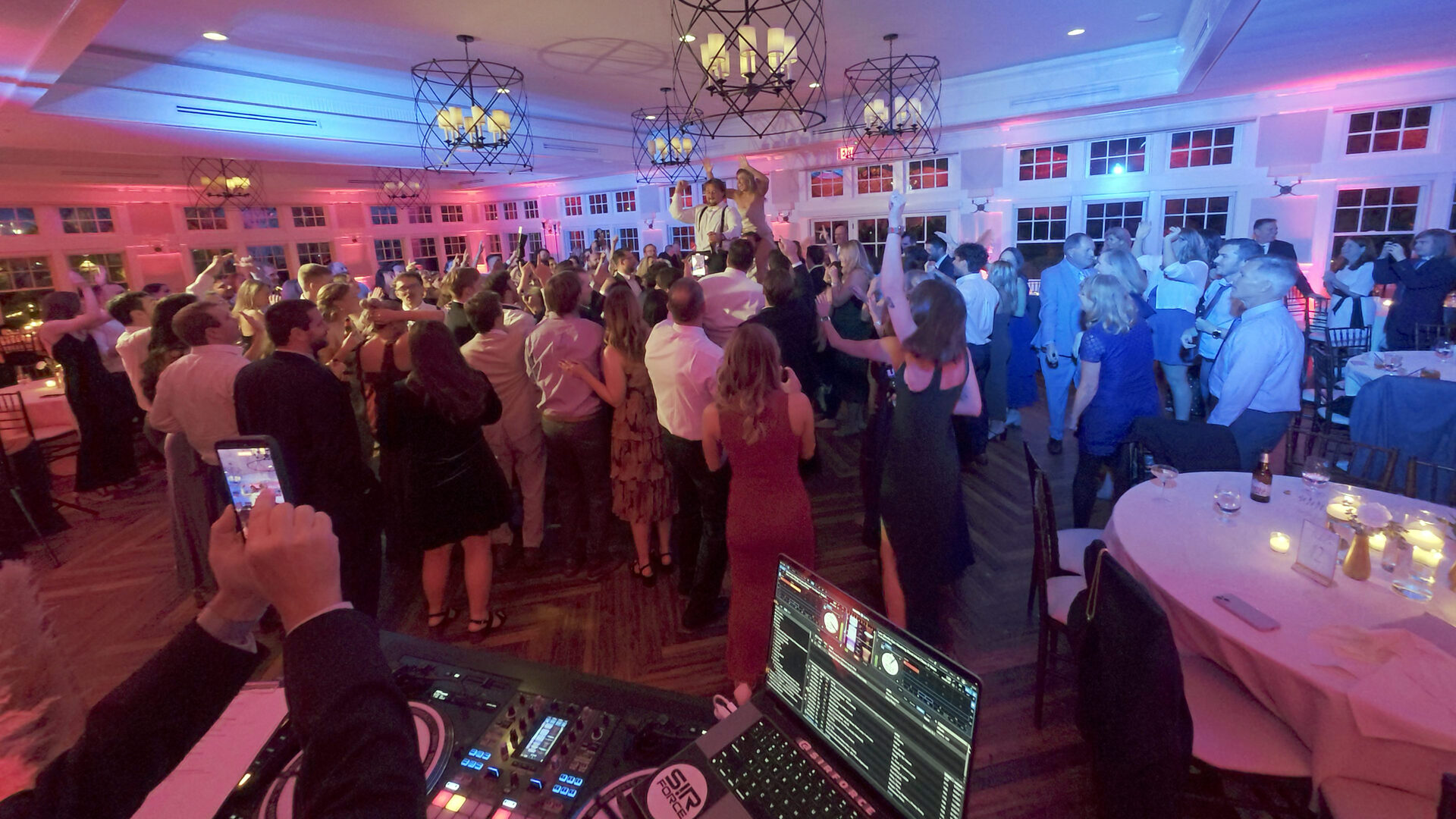
There’s no universally “best” wedding entertainment. There’s only what fits your priorities, your venue, and your guests.
If you’re deciding between a DJ, a live band, or a DIY playlist, this guide will help you compare the options honestly, without the sales pitch.
If you want to go one layer deeper on the “why,” these posts are great companions:
Start here: what kind of experience do you want?
Choose your top 2 priorities:
- Packed dance floor (high energy, lots of variety)
- Live performance wow-factor
- Budget efficiency
- Control over song choices
- Low logistics / low stress
- A specific cultural/music focus
Your choice gets easier once you know what you’re optimizing for.
Option 1: Wedding DJ (best all-around flexibility)
What a DJ does best
- Song variety across decades and genres
- Energy control (tempo and vibe can change quickly)
- Smooth transitions with mixing and pacing
- Logistics simplicity (small footprint, fast setup)
- MC support (announcements, timeline flow)
When a DJ is the best fit
- your guest list spans multiple ages
- you want both classic hits and modern music
- your venue has timing constraints (curfews, tight timelines)
- you want one vendor to support ceremony/cocktail/reception
Potential downsides
- the “live” wow factor isn’t the same as a band
- quality varies a lot between DJs (planning + MC skill matter)
Tip: If you want a “live feel,” ask about mixing style, interaction level, and whether they can incorporate specialty moments (like a short live percussion add-on, if that’s your vibe).
Option 2: Live band (best for performance and atmosphere)
What a band does best
- Live energy that feels special and unique
- Visual impact (a stage and performers changes the room)
- High-end vibe for certain venues and crowds
When a band is the best fit
- your budget supports it (bands often cost more)
- your guests love live music
- your venue can accommodate stage space and sound requirements
Potential downsides
- limited genre range (even great bands have a lane)
- breaks (many bands require them)
- higher logistics: stage, power, sound checks, volume constraints
Subtle local reality: some venues have tighter sound restrictions and earlier cutoffs. Ask bands how they handle volume and requests for quieter dinner sets.
The 2026 update: “second party” / after-party planning
In 2026, more couples are designing a “second party” vibe after formalities, either within the same reception or as a true after-party at a bar, hotel suite, or secondary space.
What this changes:
- you may want a genre pivot late-night (90s rave, EDM, hip hop, Latin, etc.)
- you may need seamless transitions and tight pacing to keep energy high
- you’ll want clarity on curfews, noise rules, and whether the venue allows a late-night push
If you’re doing an after-party, a DJ tends to be the easiest option for fast pivots and tight flow.
Hybrid options (DJ + live musician): best of both worlds
If you love the “live” feel but also want variety and nonstop flow, a popular 2026 solution is:
- live musician for ceremony/cocktail hour (and/or select reception moments)
- DJ/MC for reception and dancing
Common pairings:
- DJ + sax
- DJ + percussion/drums
- DJ + electric violin
Why it works:
- you get live “wow” moments
- you keep DJ flexibility and pacing
- you avoid long band breaks and limited genre range
If you’re considering this, ask your vendors how they coordinate:
- sound checks and cueing
- where the musician fits in the timeline
- how you’ll avoid volume clashes and feedback
Option 3: DIY playlist (best when expectations are modest)
A playlist can be a good fit when:
- your reception is small and informal
- dancing isn’t the main event
- you have a reliable audio setup and someone to manage it
The hidden risks
- no one is managing flow (awkward gaps happen)
- no MC for announcements and cues
- no real-time pivots if the room needs a different vibe
- technical issues become your responsibility
If you go DIY, assign a trusted person to:
- manage volume
- cue special songs
- keep requests from derailing the mood
- troubleshoot Bluetooth and connectivity issues
Cost comparison (what couples often underestimate)
Costs vary by market and production level, but here’s the pattern:
- Playlist: lowest cost, highest responsibility
- DJ: mid cost, best flexibility and flow support
- Band: highest cost, best live wow-factor
Remember: entertainment cost isn’t just money; it’s also risk and stress.
The “real” comparison: guest experience
For dancing
- DJ: usually strongest for keeping the floor full
- Band: can be amazing if your crowd loves their style
- Playlist: unpredictable without someone guiding energy
For formalities (entrance, toasts, first dance)
- DJ/MC: usually strongest, because it’s part of the job
- Band: depends. Some bands are great MCs, some aren’t
- Playlist: requires someone to run cues and announcements
For older guests and non-dancers
Consider adding:
- cocktail hour music that’s intentional
- a photo booth as a “social hub”
- comfortable volume levels during dinner
A simple decision shortcut
Pick the sentence that feels most like you:
- “We want a full dance floor with lots of variety.” → DJ
- “We want a live concert vibe and we love live music.” → Band
- “We want simple background music and dancing isn’t the priority.” → Playlist
If you’re torn between band and DJ, a common compromise is:
- live musician for ceremony/cocktail hour
- DJ for reception and dancing
FAQs
Can a DJ create a “live” feel?
Yes, through pacing, mixing style, crowd reading, and strong MC work. Ask for examples and how they structure a night.
Do bands usually provide an MC?
Some do, some don’t. Clarify who is responsible for announcements and timeline cues.
Is a playlist “good enough”?
It can be a good fit if your event is casual and you assign someone to manage cues and troubleshoot. For higher-stakes receptions, the risk goes up.
If you want help choosing the right entertainment plan for your guest list and venue, we’re happy to talk. Start here: contact us.
Or explore wedding services.