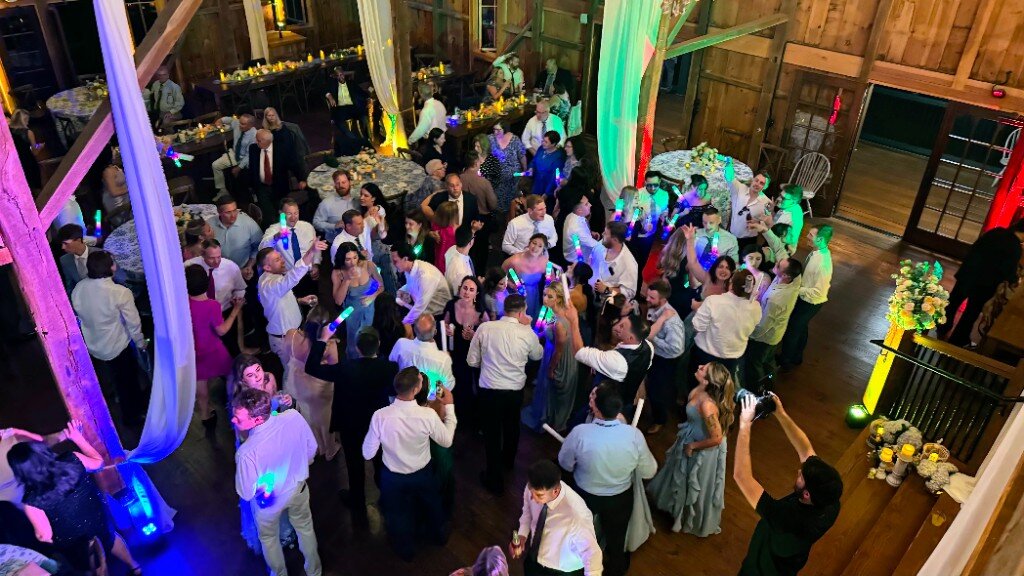
Your wedding reception should be the best party you ever throw. After years of keeping dance floors packed and celebrations running smoothly across Maryland, Northern Virginia, and Southern Pennsylvania, I’ve seen what separates an unforgettable night from one that fizzles out early.
Here are the nine most common vibe killers and how to avoid every one of them.
1. The flow fumble
Nothing kills energy faster than long gaps or awkward transitions between moments. The biggest flow mistake? Guests seated at tables too long after finishing their meals. Fatigue sets in, and by the time it’s time to dance, your crowd is ready for bed instead of the dance floor.
The fix is simple: start the next formality (speeches, first dance, cake cutting) as soon as guests are wrapping up their entrees. Your vendor team needs to be back on the floor and ready to go, which is exactly why vendor meals should be served at the same time as guest meals, not after.
One that might surprise you: going table to table as a couple is a beautiful gesture, but at a large wedding, it can delay your timeline by 30 to 45 minutes and drain the room’s momentum. A better move? Join your cocktail hour, mingle with as many guests as possible there, and consider adding a welcome party or other events to your wedding weekend so you can connect with everyone in a more relaxed, authentic way.
For a deeper dive into building a timeline that protects your energy all night, check out The Ultimate Wedding Reception Timeline.
2. The entertainment mismatch
Bad transitions. Talking over the music. Skipping crowd favorites. Any one of these is instant dance floor death.
This is something I’m passionate about because I’ve seen the difference firsthand. A great wedding DJ isn’t just pressing play on a pre-made playlist. They’re actively mixing music, thinking about BPM to build energy naturally, reading the room to know when to shift gears, and serving as MC to keep the night moving with clear, concise announcements.
When you’re choosing your entertainment, look for someone who can genuinely read a crowd and adapt in real time. That’s the difference between a dance floor that empties after two songs and one that’s packed until last call.
Not sure where to start? Our breakdown of DJ vs. band vs. playlist can help you decide what’s right for your celebration.
3. Formality overload
Too many interruptions once the party starts and guests lose momentum fast. The key is to stack your formalities early (toasts, special dances, cake cutting) so the night flows effortlessly once the dance floor opens.
Here’s the rule I live by: once that dance floor is open, keep it open. Every time you pull people off for another special moment, whether it’s another dance, a champagne tower, or a surprise tradition, more guests drift away and don’t come back. Front-load the formal stuff, then let the party run.
A strong MC makes this seamless. The right person behind the microphone keeps the pace tight, the transitions smooth, and the energy building all night.
4. The guest comfort crisis
No shade, no fans, no seats, no fun. Comfort is a luxury that pays dividends on the dance floor.
Think about what your guests need in the spaces where they’ll spend time:
- Water within reach. If your reception is outdoors or the dance floor runs hot, make sure water is accessible without a long walk. Guests won’t leave the party if they can grab a cup nearby.
- A bar close to the action. When the bar is across the venue, you lose dancers every time someone wants a refill. Keep drinks convenient to the dance floor so guests come right back.
- Seating beyond the dinner tables. Mix in low seating at cocktail hour, and add extra chairs near the dance floor so guests have a place to rest without retreating to their dinner table.
And remember: Plan B isn’t just for rain. Extreme temperatures, unexpected wind, and other conditions can tank the vibe just as fast. Nobody wants to be damp for the rest of the night because the ceremony pushed through a downpour. If you’re planning an outdoor celebration, our Wedding Day What-If Playbook covers contingency planning in detail.
5. The lighting letdown
Harsh overhead lights or total darkness will both ruin the mood (and your photos). For dinner, layered warm lighting creates instant ambiance. But for dancing? You want that dance floor as dark and club-like as possible.
This is one of those details that seems small but makes an enormous difference in how your reception feels. The right lighting transforms the space from “dinner party” to “this is a celebration” the moment the dancing starts.
If your venue doesn’t have great built-in options, professional uplighting is one of the most impactful and affordable upgrades you can make. It’s often the hidden decor element that ties everything together and can completely change the energy of a room.
6. Your venue might be too fun
Fire pits, cornhole, pool tables, farm animals, hidden rooms. The more your venue has to explore, the easier it is for guests to scatter. Character venues are beautiful, but here’s the truth: when there are endless distractions, the dance floor thins out.
That said, here’s the good news: your guests are there to celebrate you. They want to be where you are. If the couple is on the dance floor having the time of their lives, that’s where the crowd will be too. Your energy is the biggest magnet in the room.
The key is making it easy for guests to follow that energy. Once the party gets going, work with your venue to limit access to outdoor games or activity spaces so the celebration stays focused. A packed room feeding off the couple’s joy is always better than a scattered crowd exploring the property.
This is especially common at some of the incredible barn and estate venues across Maryland. They’re stunning, but they come with planning considerations that couples don’t always think about.
7. The bar line buzzkill
Nothing kills the party faster than a 20-minute wait for a drink. Long lines pull guests off the dance floor and break the flow of the night.
A few things that help:
- Staffing: One bartender for every 50 guests is a solid rule of thumb
- Passed drinks: Offer them during high-pressure transitions like right after the ceremony
- Simple menu: Keep signature cocktails crowd-friendly and quick to make. If they’re too obscure, nobody orders them.
One detail that often gets overlooked: bar placement matters. Bars that are too far from the dance floor pull guests away all night. The ideal setup has the bar in the same room as the dancing, close enough for convenience, but not so close that the line spills onto the floor.
8. The dress code dilemma
Confused guests are uncomfortable guests, and uncomfortable guests don’t dance. When the dress code isn’t clear, people spend the whole night feeling underdressed, overdressed, or out of place.
Be specific on your invitations and wedding website:
- Use clear labels: “Garden Chic,” “Black Tie Optional,” or “Cocktail Attire”
- If your venue has grass, gravel, or sand, let guests know so they can plan footwear
- Share visual cues like outfit examples or photos on your wedding website
- If the wedding is outdoors, share the expected temperature so guests dress comfortably
Setting these expectations early means everyone shows up feeling confident and ready to have a great time.
9. The stress energy
Your energy sets the tone. If you’re tense, micromanaging, or worried about every detail, your guests feel it. When the couple can’t relax, the whole celebration shifts from joyful to uneasy.
The fix starts well before the wedding day:
- Hire vendors you trust, then let them lead. Great vendor coordination means you never have to be the one managing logistics.
- Build a realistic timeline with breathing room so you never feel rushed.
- Delegate everything you can. Your only job that day is to be present and enjoy it.
- Start your morning with calm: quiet time, breakfast, deep breaths.
- Choose your wedding party thoughtfully. Surround yourself with people who bring good energy and are there to celebrate, not create drama.
A relaxed couple means a relaxed crowd. And that joy is contagious. It’s what everyone remembers most.
The bottom line
Every one of these vibe killers is fixable with the right planning and the right team. Your reception is a once-in-a-lifetime celebration, and the details, from timeline flow to lighting to bar placement, all play into whether it becomes the party everyone talks about for years.
That’s exactly what I bring to every event. After hundreds of weddings across Maryland, Virginia, and Pennsylvania venues, I know what works, what doesn’t, and how to adjust in real time to keep the energy exactly where it needs to be.
Want to talk through your wedding plans? I’d love to help you build a night your guests won’t forget.
Next step: Check availability or explore wedding services.
FAQs
What’s the single biggest thing that kills a wedding dance floor?
Poor flow and timing. Long gaps between moments let energy drop, and once guests mentally check out, it’s very hard to bring them back. Stack your formalities early and keep transitions tight.
How do we keep guests on the dance floor instead of wandering?
Focus the room. Close off outdoor activities once dancing starts, keep the bar close to the dance floor, and avoid pulling guests away for additional formalities after the floor is open. Most importantly, get out there yourselves. Your guests want to celebrate with you, and when the couple is dancing, the crowd follows.
Does lighting really make that much of a difference?
Absolutely. Lighting is one of the most underrated reception details. Warm, layered lighting during dinner sets the mood, and dark, colorful dance floor lighting transforms the energy for the party. It’s one of the highest-impact, lowest-cost upgrades you can make.
Should we let guests make song requests?
Requests can be great, but they should be curated, not automatically played. A professional DJ considers requests while protecting the overall energy and flow. Share your must-plays and do-not-plays ahead of time, and trust your DJ to manage the rest.
How far in advance should we start planning these details?
Most of these decisions happen naturally during the planning process, but the earlier you loop in your entertainment team, the better. Timeline, lighting, bar placement, and vendor coordination all benefit from early conversations, ideally 3 to 6 months out.